Getting into the creative process can lead to personal growth and healing. Art therapy uses our natural urge to express feelings through art. It can help you find deep insights, lower stress, and understand yourself better.
Art therapy taps into the power of creativity. It lets people express emotions through art, which can be hard to say in words. Painting, sculpting, or drawing can connect your conscious and subconscious mind. This helps release feelings and explore your story.
We’ll look into the science of art therapy and its many benefits. You’ll learn how to use art for healing and growth. Whether you want to handle stress, improve your mental health, or find yourself, art can help.
Understanding Art Therapy and Its Benefits
Art therapy, also known as expressive arts therapy or art psychotherapy, combines creative expression with professional guidance. It sees the creative process as healing. This way, people can explore their feelings, share their stories, and grow through art.
Through art therapy, people can express their inner thoughts and feelings safely. It helps improve self-esteem, reduces stress, and boosts communication skills. Creating art can be a journey of healing, helping people deal with trauma and find new ways to see their lives.
“Art therapy is a means of communication, a way of feeling, a method of self-exploration, and a therapeutic tool.” – Cathy Malchiodi, art therapist and author
Art therapy helps people connect with themselves, leading to self-awareness and growth. It doesn’t matter what medium they use, like paints or clay. The experience of creating art can be very healing.
Learning about art therapy can help people use it to overcome life’s challenges. It empowers them to face difficulties with more strength and self-expression.
The Science Behind Art Therapy
Art-based interventions have a big impact on mental health and emotional well-being. Recent studies have uncovered the brain and psychological reasons behind this. Creating art can activate certain brain areas, improving emotional control, reducing stress, and boosting cognitive function.
A study in the Journal of the American Art Therapy Association showed that art in mental health boosts the prefrontal cortex. This area is key for decision-making, solving problems, and handling emotions. This brain activity was linked to less anxiety and depression in participants.
“The process of creating art allows individuals to express and process emotions in a non-verbal, therapeutic way, which can have a profound impact on their mental well-being.”
Art-based interventions also increase dopamine and serotonin, key for mood and emotional health. This creative activity can make the brain’s reward system active. This leads to feelings of achievement and better self-esteem.

The link between creativity and mental health is clear. Art therapy uses this connection. It helps people explore their thoughts and feelings, understand themselves better, and find ways to cope with mental health issues.
Ways Art Therapy Supports Emotional Well-being
Art therapy is a powerful tool for emotional well-being. It lets people tap into their inner world through creativity. This way, they can express and process their feelings in a non-verbal way.
Art therapy helps heal emotional trauma. Creating art provides a safe space to face and work through traumatic experiences. This process can lead to emotional release and renewed strength.
It also helps manage anxiety and depression. The focus on art-making can distract from worries, bringing calm and relaxation. Creating something tangible boosts self-esteem and confidence.
“Art therapy is a powerful tool for emotional healing. It allows individuals to access their inner world and express themselves in ways that words can’t.”
Art therapy fosters resilience and personal growth. It encourages self-exploration and problem-solving. Through art, people gain a deeper understanding of themselves and their emotions.
Integrating art therapy into one’s life can be transformative. It opens new paths to emotional healing and personal growth. This supports overall emotional well-being.
Art Therapy Techniques You Can Try at Home
Exploring your creativity can be a healing journey. You don’t need a professional art therapist to start. There are many art therapy activities you can do at home. Let’s explore some easy yet powerful ways to care for your mind, body, and soul.
Mandala drawing is a great place to start. Mandalas are circular designs that can represent the universe or your inner self. Just grab some paper and colored pencils or markers. Let your intuition guide you as you create.

Collage-making is another fun activity. Gather old magazines, newspapers, photos, and other items. Arrange them on a canvas or paper to show your thoughts and feelings. Play with textures, colors, and shapes to create a visual of your inner world.
“Art therapy allows individuals to express themselves and process emotions in a unique way that goes beyond traditional talk therapy.”
Painting with your hands or fingers is also rewarding. Let the colors move freely on the paper. Your brush strokes can show your mood or energy. It’s a great way to release feelings when you’re feeling stuck or overwhelmed.
Trying these simple art therapy techniques can open new doors for self-discovery and growth. Enjoy the creative process and see how it can improve your well-being.
Target Populations for Art Therapy
Art psychotherapy and art-based interventions help many people. They work for kids with developmental disorders, adults with mental health issues, and seniors with cognitive decline. Art therapy is a powerful tool for healing and growth.
For kids, art therapy is a safe way to express feelings. It helps improve communication and address behavioral issues. Through creative activities, kids build self-esteem and learn to cope.
“Art therapy allows children to express themselves in ways that traditional talk therapy may not. The process of creating art can be deeply therapeutic and insightful.”
Adults with mental health issues like anxiety, depression, or PTSD also benefit from art therapy. Creating art helps process emotions, reduce stress, and develop self-awareness.
Art therapy also helps seniors with cognitive decline, like Alzheimer’s and dementia. It stimulates senses and taps into memories. This improves mood, reduces agitation, and boosts self-expression.
Art therapists adapt their methods for each person or group. Art helps people from all backgrounds discover themselves, heal, and grow.
Finding an Art Therapist
If you’re curious about art therapy, finding a qualified therapist is the first step. Art therapists blend art and psychology to help people express themselves. They unlock your inner potential through art.
When looking for an art therapist, check for a master’s degree and registration. Look for credentials from the American Art Therapy Association. This shows they have the skills and knowledge for effective care.
“Art therapy allows individuals to explore their thoughts, feelings, and experiences through the creative process, promoting self-discovery and personal growth.”
It’s also key to find a therapist who fits your needs and personality. Schedule a consultation to see if they’re a good match. Ask about their experience with clients like you.
Use resources like the American Art Therapy Association’s directory to find art therapy professionals near you. With the right therapist, you can start a journey of self-discovery and healing through art.

Art Therapy in Clinical Settings
Art therapy is now a key part of many clinical settings. It offers a special way to treat mental health and help with recovery. In hospitals, it helps patients deal with physical and emotional challenges.
In rehabilitation centers, art in mental health is also important. It works alongside traditional treatments to help people regain their independence. The creative process helps patients express themselves and work through their recovery.
Mental health clinics also see the value of art-based interventions. Art therapy is a gentle, whole-person approach to treating many mental health issues. It helps patients understand their feelings, become more aware of themselves, and find healthy ways to cope.
“Art therapy allows individuals to explore their inner world and emotions in a safe and supportive environment, ultimately promoting healing and personal growth.”
Combining art therapy with other treatments, like cognitive-behavioral therapy, is very effective. This mix helps meet the full range of patient needs, offering a tailored treatment plan.
As art therapy grows, so will its role in clinical settings. More research shows it’s a valuable part of treating mental health and wellness.
Creating a Healing Environment for Art Therapy
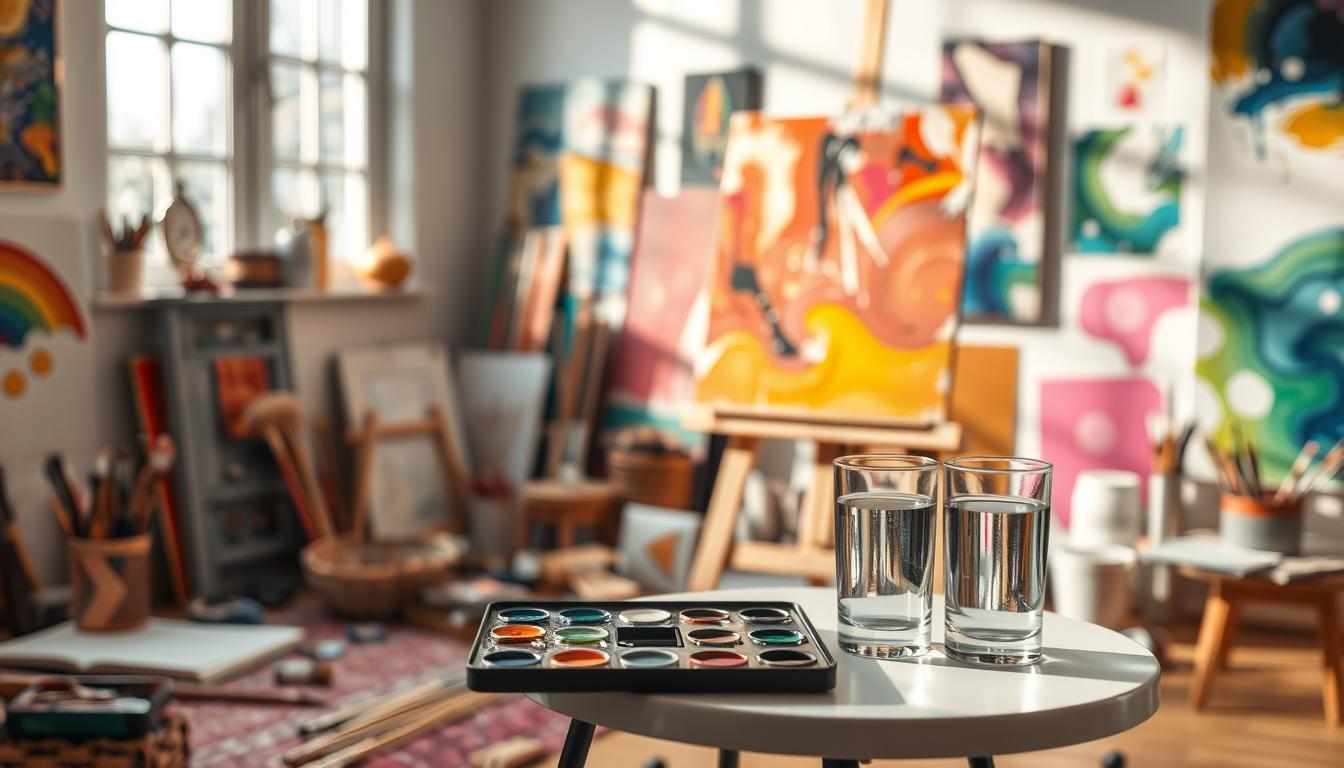
The environment is key in art therapy. It helps create a safe, creative, and healing space. This is true whether you’re setting up at home or in a professional setting.
Lighting is very important. Look for soft, natural light to calm the atmosphere. Avoid harsh overhead lights that can be too much. Use lamps with warm bulbs or windows for gentle sunlight.
It’s also important to organize and make art materials easy to get to. Arrange your supplies in a way that looks good and is easy to find. Make sure paints, brushes, and paper are within reach, so you can focus on creating.
Lastly, make the space welcoming and supportive. Art therapy is about expressing yourself, not making perfect art. Add positive messages and reminders that the journey is more important than the end result in art for well-being.
“The true work of art is but a shadow of the divine perfection.”
– Michelangelo
By creating a thoughtful environment, you can unlock the power of therapeutic art. This helps foster safety, creativity, and healing.
The Role of Group Art Therapy
Engaging in expressive arts therapy can be a powerful tool for personal growth and healing. This is especially true when done in a group setting. Group art as therapy sessions offer a unique chance to connect with others, share experiences, and support each other on the journey of self-discovery.
In a group art therapy environment, participants explore their emotions, thoughts, and experiences through various artistic mediums. This collaborative approach allows individuals to see the creative process of their peers. It fosters a sense of unity and mutual understanding. The group dynamic provides a safe and nurturing space for participants to express themselves freely, without fear of judgment.
“Art-making in a group setting can be a powerful tool for self-expression, personal growth, and fostering connection. Participants not only create their own art but also have the opportunity to witness and support the creative journeys of others.”
Group art therapy activities can take many forms. From communal painting or sculpting projects to individual exercises shared with the group. These activities are designed to promote self-reflection, encourage the exploration of different perspectives, and cultivate a sense of empowerment and resilience.
By participating in group expressive arts therapy, individuals can experience the healing power of connection, collaboration, and the shared exploration of the creative process. This unique approach to therapy can be particularly beneficial for those seeking to address issues such as trauma, anxiety, depression, or simply a desire for personal growth and self-discovery.
Personal Stories of Healing Through Art
Healing through art is a deeply changing experience. Many people have found new paths through art. Sarah, for example, was dealing with anxiety and depression. She started painting and found her voice.
“Art gave me a voice when I couldn’t find the words,” she says. “It became a safe space where I could process my feelings and find a sense of peace.”
Michael, a veteran with PTSD, found peace in sculpting. “Working with clay was incredibly therapeutic,” he explains. “It allowed me to physically manifest my inner turmoil and gradually release the emotional burden I had been carrying.”
Michael’s sculptures are powerful reminders of art therapy’s healing power.
“Art gave me a voice when I couldn’t find the words. It became a safe space where I could process my feelings and find a sense of peace.”
These stories show how art therapy helps people grow and heal. It helps with mental health and gives a creative outlet for emotions. The power of art therapy is clear. As more people try it, the healing potential grows.

Continuing Your Art Therapy Journey
Starting your art therapy journey is just the first step. The real magic happens as you keep growing and healing through art. To keep exploring, look for more resources, make art regularly, and find others who share your passion.
Check out books, online courses, and local workshops to learn more. Experts like Cathy Malchiodi, Shaun McNiff, and Bruce Moon share their knowledge. These resources can help you discover new ways to express yourself creatively.
Make art a regular part of your life. It could be journaling, painting, or sculpting. Set aside time for it. This practice will help your emotional health and connect you with yourself. Remember, art therapy is a lifelong journey. The more you nurture it, the more it will nourish your soul.