Australia’s Indigenous peoples have a deep and fascinating culture that has lasted for thousands of years. Their ancient stories and complex family ties show us a unique view of the world. These traditions let us peek into the oldest living culture on Earth.
This article will look into the many Indigenous communities in Australia. We’ll explore their history, spiritual beliefs, art, and how they adapt today. By seeing their strong bond with the land and their traditions, we’ll learn to appreciate their strength and culture.
Their art, like the colorful rock paintings, and their music and dances, show a world that has lasted for ages. Join us as we discover the amazing heritage of these incredible people.
Introduction to Indigenous Australian Cultures
Australia’s Aboriginal people show a wide range of cultural practices and traditions. They have lived in Australia for thousands of years. Their history and culture are key to understanding Australia’s heritage.
Diversity of Indigenous Communities
Aboriginal Australians are not all the same. They are many different groups, each with their own culture. From the Torres Strait Islander people to the Koori in the southeast, their diversity is amazing. This shows how resilient and adaptable they have been over the years.
Historical Context and Significance
The history of Aboriginal Australians goes back tens of thousands of years. They have been in the region for at least 65,000 years, according to archaeologists. Their cultures have greatly shaped Australia today, adding to its unique traditions and views.
Now, their culture is seen as very important in Australia. There are efforts to keep and celebrate their traditions. This shows how resilient these communities are.
Dreamtime Stories and Oral Traditions
At the core of Indigenous Australian culture are dreamtime stories. These ancient tales have been shared for generations. They give us a peek into the spiritual and cosmic beliefs of Australia’s First Nations people. Dreamtime stories tell of the world’s creation, the beginnings of natural events, and the values that guide Indigenous Australians.
Storytelling is key to Aboriginal mythology. It helps keep cultural knowledge alive, teaches moral lessons, and connects people to the land. These stories keep the rich heritage of Indigenous Australians alive. They link history, spirituality, and identity together.
Diving into dreamtime stories shows us the deep bond between Indigenous Australians and their lands. These stories often feature spiritual beings, called ancestral or Dreaming beings. They are thought to have molded the land and its spiritual aspects. By exploring these tales, we learn more about the cultural and environmental importance of Indigenous Australian stories.
Art and Artistic Expressions
The indigenous Australian cultures have a rich and diverse artistic heritage. They show their deep bond with the land and their spirituality. From aboriginal rock art and paintings to indigenous Australian music and dance, these traditional artistic expressions are key to Australia’s First Nations identity.
Rock Art and Paintings
Rock art and paintings are very important in indigenous Australian art. They tell stories of the dreamtime, mythological beings, and the link between the land and its people. These artworks, found in remote areas, show symbols, animals, and scenes of daily life and traditional activities.

Music and Dance
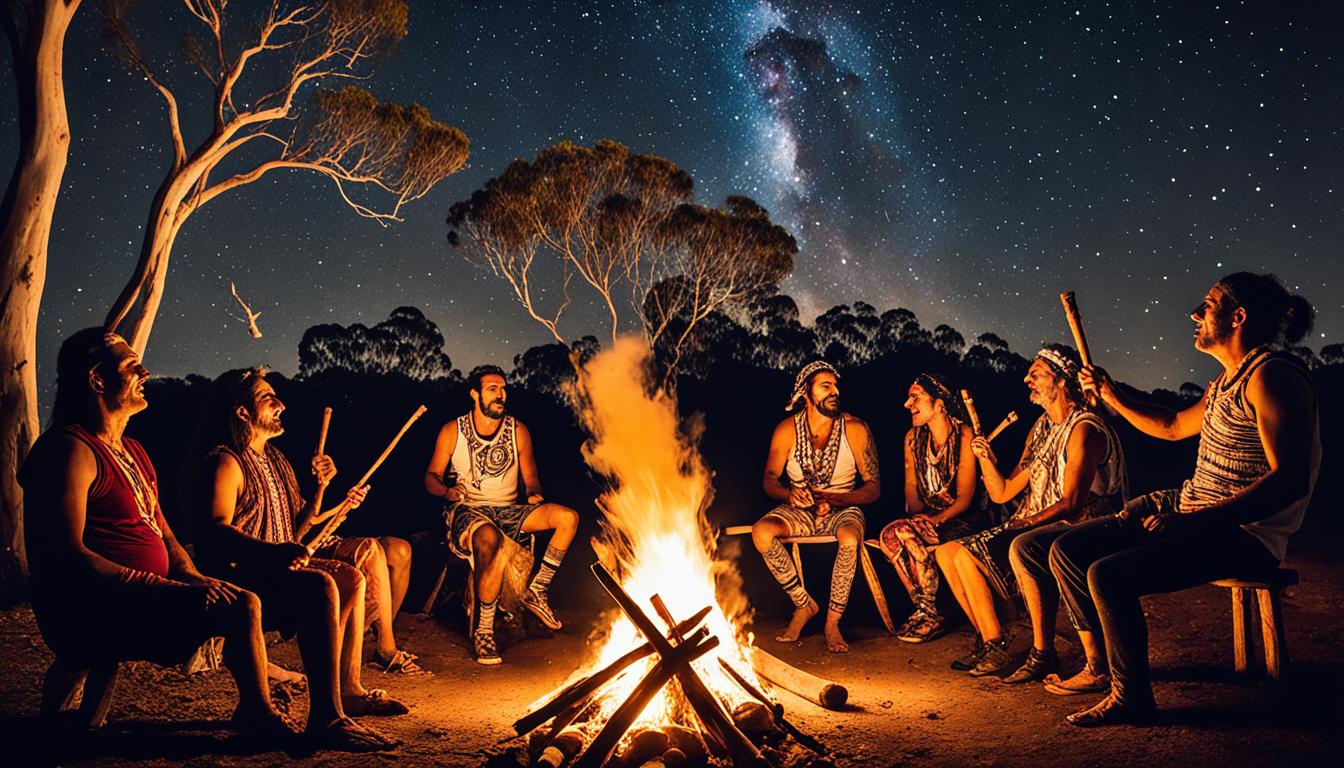
The indigenous Australian music and dance traditions are a big part of their culture. From the haunting didgeridoo to body painting and dances, these traditional artistic expressions are for celebrations, storytelling, and connecting with the spiritual world.
The indigenous Australian art and its many forms amaze and inspire people all over the world. They show the resilience and creativity of Australia’s First Nations people.
Spirituality and Connection to the Land
Indigenous Australian cultures have a deep bond with the land. This spiritual connection is key to their worldview. It shapes their beliefs, traditions, and life.
They see themselves as part of the natural world. They feel a duty to care for and respect the land that feeds them.
Totems and Ancestral Beings
Totems and ancestral beings are central to their spirituality. Totems are sacred animals, plants, or natural features that link to a person’s kinship group. They are seen as spiritually important and guide people’s choices.
Ancestral beings are supernatural figures deeply rooted in their cultures. They are thought to have made the land and shaped the world. Their influence is felt in stories, ceremonies, and everyday life.
The respect for totems and ancestral spirits shows their deep connection to land and ancestral spirituality. These beliefs and practices are key to their cultural identity. They link them to their past, present, and future in a meaningful way.
Understanding the importance of aboriginal totems and ancestral spirits in indigenous culture helps us see the depth of indigenous Australian spirituality.
Culture of Indigenous Australians
The indigenous cultures of Australia are deeply rooted in the land. They have traditions and practices that go back thousands of years. Each community has its own unique customs and beliefs, showing the rich diversity of the First Nations people.
They have intricate kinship systems and a deep respect for nature. This shows how resilient and adaptable these ancient societies are.
At the core of indigenous Australian culture is a strong bond with the land. They see themselves as the earth’s guardians. They keep the ecosystem in balance with their traditional ways.
This respect for nature is also seen in their spiritual beliefs. These beliefs often focus on the Dreamtime, a sacred place where their ancestors’ stories live.
Indigenous Australians also have a strong oral tradition. This tradition has been shared for generations. It includes Dreamtime stories that help preserve their culture and explain the world to them.
These stories are not just for cultural preservation. They also help the indigenous people of Australia keep their heritage alive. They pass on the traditions of their first nations people.
Traditional Hunting and Gathering Practices
For centuries, indigenous Australian communities have used traditional hunting and gathering to survive. These practices show their deep connection to the land and their focus on sustainable living. They forage for bush foods and harvest medicinal plants, living in harmony with nature.
Bush Foods and Medicinal Plants
The Australian bush is full of edible and medicinal plants. Indigenous Australians know how to find and use these plants. Foods like quandong, lilly pilly, and bush tomato are important for their diet. Medicinal plants like boobialla and native thyme have been used for health for a long time.
They manage these resources carefully to keep them available for the future. This shows their holistic view of the world. They see themselves as land caretakers, not just users. Their knowledge and harvesting skills help maintain the ecosystem’s balance.

This approach shows their deep respect for nature. It ensures these valuable resources will be there for future generations.
Kinship Systems and Social Structures
Indigenous Australian cultures have complex kinship systems at their core. These systems shape their social structures. They guide the intricate web of family and community ties that shape the lives of Australia’s First Nations people. It’s key to understand these social frameworks to grasp the richness and diversity of indigenous Australian cultures.
At the core, these kinship systems are built on beliefs and values about family, community, and land connection. The idea of “family” goes beyond the immediate family. It includes a wide network of extended relatives, clans, and tribes. This system affects every part of indigenous life, from social roles to spiritual practices and traditions.
Family and community are central to indigenous cultures. Kinship systems define who you are and your role in the community. They outline your duties and rights. These systems are not just ideas but are part of everyday life and decision-making for indigenous Australians.
Language Diversity and Preservation
Indigenous Australian languages show a rich cultural heritage. Each language is a unique way to express the culture of Aboriginal communities. Australia has over 150 languages, making it one of the most diverse places for languages in the world. But, these languages have faced big challenges to survive through history.
Revitalization Efforts
Recently, there’s been a big push to save these languages. Community groups, governments, and non-profits are working hard. They’re documenting, teaching, and promoting these languages. This includes language classes, language nests, and cultural exchanges.
Keeping indigenous Australian languages alive is very important. They’re not just ways to talk; they’re key to the culture, traditions, and views of Australia’s First Nations people. Saving these languages honors the history of indigenous communities. It also helps keep our cultures diverse and improves life for everyone.
Even with big challenges, indigenous Australians have kept their languages going. Their efforts to revive these languages give us hope. We look forward to a future where these languages are celebrated and kept alive for many years.
Contemporary Indigenous Culture
The modern indigenous Australian culture is deeply rooted in ancient traditions. Yet, it has evolved with the times. Indigenous communities show great resilience, keeping their rich culture alive through tough times. This section looks at how indigenous culture lives on today and the strength of Australia’s First Nations people.
Challenges Facing Indigenous Communities
Indigenous Australians face many challenges, like the effects of colonization and economic gaps. They also struggle to keep their cultural identity. Issues like losing land and changing their traditional lives are common. But, they’ve adapted and kept their bond with the land and traditions strong.
The Resilience of First Nations People
The resilience of first nations people in Australia is truly moving. They’ve shown great ability to adapt and succeed, using their cultural and spiritual roots. They’re working to bring back old art forms and keep their languages and knowledge alive. This shows their strong commitment to their heritage. Their resilience highlights the strength and will of indigenous communities, shaping today’s Australian culture with their unique views and stories.
Cultural Events and Celebrations
The rich culture of Indigenous Australians is celebrated with vibrant events and ceremonies. These festivals and celebrations unite communities. They highlight the spirit and diversity of Australia’s First Nations people.
Indigenous Australians honor their deep bond with the land and ancestors through various events. These events feature traditional dances, music, and stories. They let people dive deep into their timeless traditions.
The NAIDOC Week is a major event that celebrates Aboriginal and Torres Strait Islander peoples’ history, culture, and achievements. It’s a week-long celebration with art shows, cultural performances, and workshops across Australia.
The Garma Festival is another big event, lasting four days in Arnhem Land. It highlights the Yolŋu culture with music, dance, and sharing traditional knowledge. The festival draws visitors worldwide. It’s a chance for Indigenous Australians to share their culture and build understanding with others.
Reconciliation and Cultural Understanding
The journey towards reconciliation between Indigenous and non-Indigenous Australians is crucial. It involves talking, learning, and keeping the heritage of Australia’s First Nations alive. This helps us come closer and respect each other more. We’ll look at how we’re working to honor Indigenous cultures and move forward together.
Keeping aboriginal heritage alive is key. It keeps old traditions and important knowledge going. Groups like the Aboriginal Heritage Council protect sacred places, help languages come back, and give Indigenous leaders a voice. Through programs and learning, everyone can learn to value Indigenous cultures more.
Understanding each other’s cultures is very important. Talking openly helps us get past old ideas, fix past wrongs, and build a future where we’re all together. The Reconciliation Action Plan shows how groups across the country are working towards this goal. They aim for real relationships based on trust and respect.