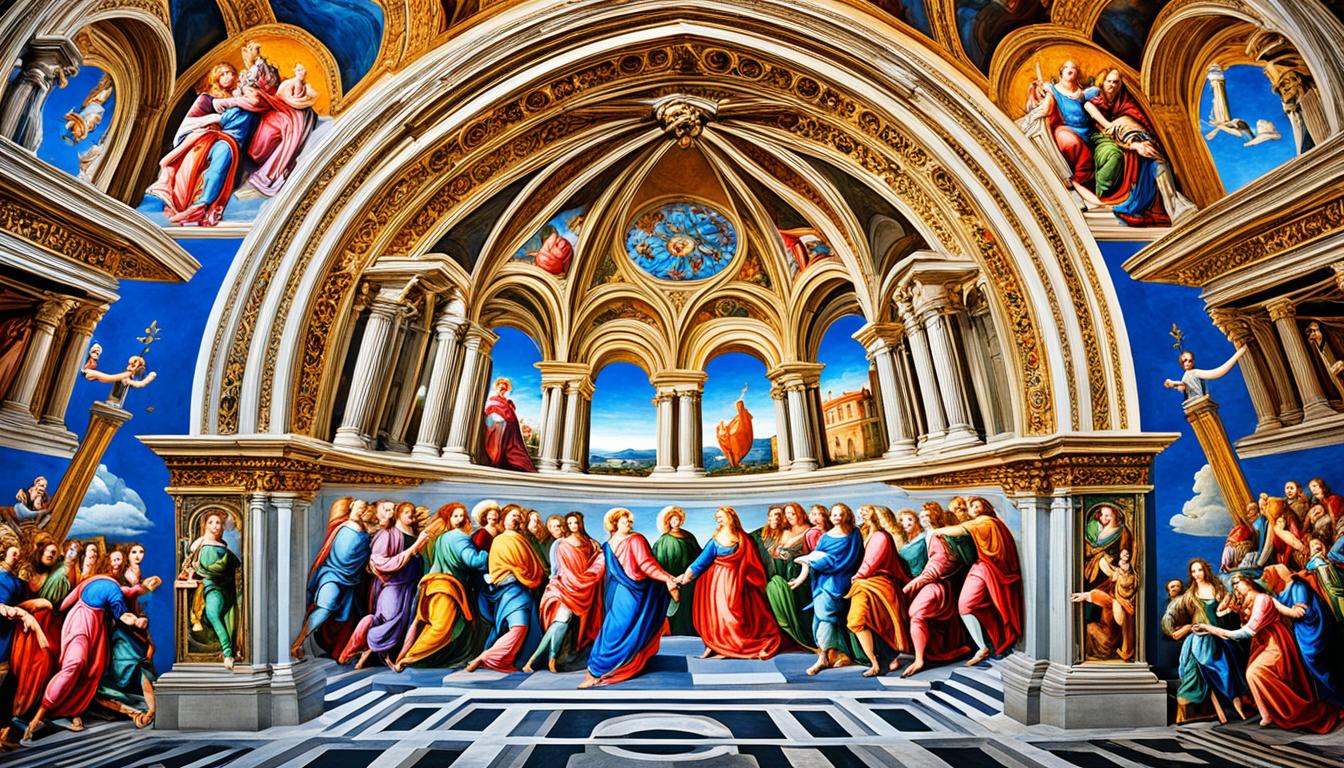
The Renaissance era was a key time in European history. It brought about a big change in culture. This change touched art, science, literature, and society deeply.
This period, from the 14th to the 17th century, saw a big interest in the classical world again. It led to more love for the arts and a growth of individualism. There were also big steps forward in many areas of knowledge.
The cultural significance of the Renaissance is huge. It set the stage for many ideas and values we see today. It started with finding old Greek and Roman texts again. It also brought new scientific and artistic discoveries.
Looking into the Renaissance helps us understand what made it so special. We’ll see how it changed culture and its lasting effects. Let’s dive into this exciting time together and see how it still shapes our world.
Rediscovering the Classical World
The Renaissance era was deeply fascinated with ancient Greece and Rome. Scholars and artists loved the classical world’s rich culture. This led to a cultural revival that changed the Renaissance greatly.
Renaissance Humanism and the Revival of Greek and Roman Literature
Renaissance Humanism was at the core of this rediscovery. It focused on classical texts, languages, and philosophies. Scholars translated and shared ancient Greek and Roman works widely.
This brought new ideas to the era’s thinkers and inspired artists and writers. It changed how people thought and created.
The Impact of Ancient Art and Architecture on Renaissance Culture
People also fell in love with ancient art and architecture again. Artists and architects looked at the old masters for inspiration. They mixed ancient styles with their own, creating something new.
This mix of old and new was a key part of the Renaissance. It showed in the amazing buildings and sculptures of the time.
The classical world’s rediscovery was key to the Renaissance’s cultural growth. It influenced the era’s thought, art, and architecture. This love for the past helped create the Renaissance’s big achievements and lasting impact.
The Birth of Individualism
The Renaissance was a big change in culture and art. It brought a focus on exploring who we are and what we want. This was a big change from the Middle Ages, where people were more focused on their place in society.
Renaissance humanism was a key idea that valued each person’s ability to express themselves. It made people see the value in exploring their talents and passions. This idea encouraged people to look inward and discover their own interests.
This new way of thinking was seen in art and culture. Artists and writers of the time used their work to share their unique views. This was a big change from the past, where art was often made for a group rather than an individual.
People started to see themselves in a new light during the Renaissance. They realized they didn’t have to just follow their social roles. They could make choices and pursue their own goals. This change had a big effect on society, influencing art, culture, and thought for years to come.

Advancements in Sciences and Arts
The Renaissance was a time of great cultural and intellectual growth. It brought about major changes in the sciences, arts, and literature. This era saw a new love for the classical world and a burst of innovation and creativity.
Renaissance Contributions to Art, Architecture, and Literature
During the Renaissance, we saw the rise of famous artists, architects, and writers. Artists like Leonardo da Vinci and Michelangelo created works that changed history. Architects like Brunelleschi and Palladio built structures that still amaze us today.
Writers like William Shakespeare, Dante Alighieri, and Miguel de Cervantes wrote stories that people still love. Their works show the era’s creativity and deep thinking.
The Renaissance was also a time of big scientific discoveries and new technologies. Scientists like Galileo Galilei, Isaac Newton, and Johannes Kepler changed how we see the world. Their work started the Scientific Revolution.
Johannes Gutenberg’s printing press was another big change. It spread knowledge widely and made learning available to more people. This changed literature and education forever.
Culture of the Renaissance Courts
The Renaissance was a time of great arts, sciences, and cultural growth. This was made possible by the support of powerful families like the Medicis in Florence. These courts were centers of art and learning. Wealthy people there supported famous artists, scholars, and innovators.
The Role of Patronage and the Medici Family
The Medici family was very influential during the Renaissance. They greatly helped the arts and culture by supporting artists and thinkers. Their support helped artists and thinkers show off their skills.
The Medici family’s support for the Renaissance courts was key to the growth of arts, sciences, and literature. This era was truly transformative.
The patronage system was a big part of the Renaissance courts. Wealthy people or families would back artists and scholars. This led to the creation of famous art and literature. It also made the courts vibrant places for ideas and creativity.
The Medici family was famous for supporting the arts. They commissioned works from great artists like Michelangelo, Raphael, and Botticelli.
The Spread of Renaissance Culture Across Europe
The Renaissance’s cultural achievements spread far beyond Italy, touching many parts of Europe. This spread was through sharing ideas, art, and knowledge. It made Renaissance culture known across the continent.
Italy was the heart of the Renaissance, and its artists and scholars reached out to Europe. Artisans moved, humanists traveled, and rich families supported them. This spread the Renaissance’s artistic and intellectual ideas far and wide.
This wasn’t just one-way, though. As Renaissance culture moved, it mixed with local traditions. This created a rich mix of art and ideas. It made the Renaissance’s cultural impact even bigger across Europe.
Renaissance culture’s wide reach shows how art and ideas can connect Europe. It brought together Renaissance ideals, art, and knowledge. This created a cultural movement that went beyond Italy, changing Europe’s art, literature, and thought.
The Printing Revolution and the Dissemination of Knowledge
The invention of the printing press in the Renaissance changed everything. It made it easy to share classical texts, scientific discoveries, and art with more people. This made knowledge available to everyone, not just the rich.
The Impact of the Printing Press on Renaissance Culture
Johannes Gutenberg introduced the printing press in the 15th century. This changed how information spread across Europe. Before, making and sharing books was slow and only for the wealthy. But the printing press made books cheap and easy to get.
This made a big difference in Renaissance culture. People could now easily read classical texts and scientific works. Art and ideas reached more people, helping the Renaissance grow.

The printing press also made sharing ideas and knowledge easier. It helped spread messages far and wide. Reformers like Martin Luther used it to share their beliefs, starting the Protestant Reformation. This gave people more freedom to think and believe as they wanted, which was key to the Renaissance.
The Renaissance Legacy in Modern Culture
The Renaissance changed the world in big ways. Its ideas and art still shape our lives today. This era’s impact is seen in art, science, and philosophy, making our world what it is.
Art from the Renaissance still moves us. Artists like Leonardo da Vinci and Michelangelo inspire us. Their styles and techniques changed art forever.
Renaissance architecture also left its mark. Its beauty and design influence buildings everywhere. It shows in the look of cities and buildings today.
Science from the Renaissance changed our view of the world. Thinkers like Copernicus and Galileo started new ways of understanding nature. Their work led to big discoveries and new tech.
The Renaissance valued each person’s potential. This idea changed how we see education and personal growth. It made us value our own worth and abilities.
The Renaissance’s legacy shows us what humans can achieve. It’s seen in our art, buildings, science, and thoughts. It reminds us of the power of creativity and knowledge.
Cultural Achievements and Influences
The Renaissance was a key moment in Western history. It left a lasting impact on our culture today. It brought back the beauty of classical art, architecture, and literature.
Artists like Leonardo da Vinci, Michelangelo, and Raphael changed how we see the world. Their works still move and inspire people everywhere. The Renaissance also boosted science with thinkers like Galileo Galilei and Isaac Newton. They helped us understand the universe better.
The Renaissance’s effects go way beyond its time. It taught us about being individuals, thinking deeply, and seeking knowledge. These values are key in today’s Western world. The Renaissance’s art, architecture, literature, and science keep inspiring us. They shape our culture and encourage new creativity and innovation.