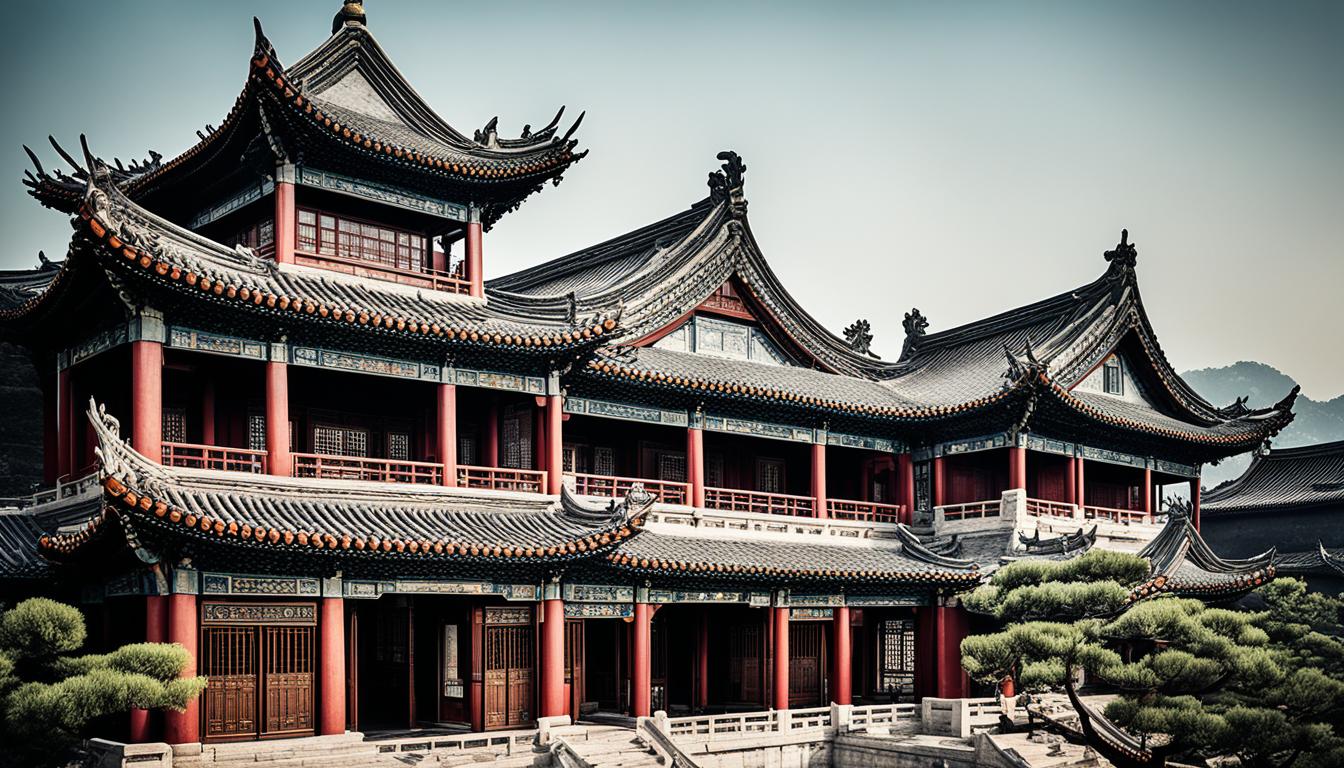
Chinese culture is a rich tapestry that has been woven over thousands of years. It reflects the enduring spirit and resilience of the Chinese people. From ancient times to today, this vibrant civilization has evolved. It has adapted to new challenges and opportunities while keeping its core traditions.
At the heart of Chinese culture is a deep respect for history, a reverence for philosophical thought, and a profound appreciation for the arts. This cultural legacy has shaped the lives of the Chinese people. It has also left a mark on the world, influencing art, literature, and philosophy globally.
As we explore Chinese culture’s evolution, we’ll see its ancient roots and the traditions that have shaped it. We’ll look at the dynamic interplay of philosophical traditions and the growth of artistic expression. Join us on this journey through Chinese culture, where the past and present meet to inspire and enlighten us.
Unveiling the Ancient Roots of Chinese Culture
China’s rich culture has deep roots in ancient civilizations along the Yellow River. This area is known as the “Cradle of Chinese Civilization.” It saw the start of early and key developments in Chinese history. These laid the base for China’s lasting culture.
The Fertile Cradle of Chinese Civilization
The Yellow River basin was perfect for early Chinese settlements. It had lush landscapes and plenty of resources. The first Chinese dynasties, like the Xia, Shang, and Zhou, started here. They set up their politics and social systems.
This area’s fertile soil and steady water helped grow advanced farming. This supported the growth of bigger, more complex societies.
Philosophical Foundations: Taoism, Confucianism, and Buddhism
Chinese civilization led to three big philosophical ideas: Taoism, Confucianism, and Buddhism. These ideas changed how Chinese people saw the world. They also shaped their social, political, and artistic ways.
Taoism teaches about the natural flow of the universe and living in harmony. It affects Chinese art, literature, and how they govern. Confucianism is about social order, being respectful to parents, and moral growth. It has guided Chinese society for centuries.
Buddhism came from India and added to China’s spiritual and philosophical mix. Mixing Buddhist teachings with Chinese beliefs led to unique Chinese Buddhist schools. These have influenced Chinese art, literature, and everyday life.
These beliefs have woven together to create a rich cultural mix. This mix still shapes the Chinese identity and worldview today. Knowing about Chinese culture’s ancient roots helps us understand its depth and complexity.
The Dynastic Eras: A Tapestry of Cultural Splendor
Chinese history is a rich tapestry with many dynasties, each leaving a mark on the nation’s culture. From the ancient Xia and Shang dynasties to the Qing dynasty, these periods have deeply shaped Chinese civilization.
The rise and fall of these dynasties have driven China’s cultural growth. Each brought new artistic, literary, and philosophical ideas. These have added to the depth and variety of Chinese culture. The legacy of these eras still fascinates scholars and fans, showing the richness of Chinese civilization.
Exploring China’s dynasties reveals a long history of cultural beauty. From grand palaces to detailed literary works, these eras’ influence is part of Chinese identity. By seeing how China’s past and culture interact, we learn more about this ancient civilization.
Artistic Expression: Calligraphy, Painting, and Pottery
Chinese culture is known for its deep artistic traditions. These include the beauty of Chinese calligraphy and the stunning paintings that have won global acclaim. These arts have become symbols of Chinese culture and have made a lasting impact on the world of art.
The Delicate Beauty of Chinese Calligraphy
Chinese calligraphy is at the core of its artistic heritage. This ancient art has been around for thousands of years. It’s celebrated for its elegant strokes and deep cultural meaning.
Calligraphers have made this art a form of pure expression. Each brush stroke carries a deeper meaning and emotion.
Masterpieces of Chinese Painting
Chinese painting has amazed people all over the world. It’s known for its unique style, bright colors, and beautiful depictions of nature. From the dreamy landscapes of the Song Dynasty to the bold brushwork of the Ming and Qing eras, Chinese painting has made a big mark on the art world.
These paintings show the skill of Chinese artists and the deep cultural importance of their work.
Chinese culture is also famous for its beautiful pottery. From the fine porcelain of the Ming Dynasty to the detailed designs of Jingdezhen, Chinese pottery has been loved in homes and museums worldwide. It highlights the country’s rich artistic traditions and cultural heritage.

These arts have become key parts of Chinese culture and are recognized worldwide. The beauty of Chinese calligraphy, the stunning paintings, and the exquisite pottery show the lasting impact of Chinese artistic traditions.
Literature and Poetry: Echoes of the Chinese Soul
Chinese literature and poetry are seen as key parts of the nation’s deep cultural roots. They have touched people all over the world, showing us the deep feelings of the Chinese soul. From old poems to new stories, words have been crucial in keeping Chinese culture alive.
Classical Chinese Poetry: Timeless Verses of Beauty
At the core of Chinese literature is classical poetry. These poems, written by great writers, have lasted for many years. They speak to common human feelings like love, loss, and searching for meaning. Their beauty and skill have made them a precious part of Chinese culture, loved by people everywhere.
Li Bai’s “Drinking Alone by Moonlight” and Du Fu’s “Autumn Meditations” show the beauty and wisdom of Chinese poetry. These poems don’t just express culture but are a big part of the Chinese people’s identity. They help shape how they see the world and their place in it.
Culture in Everyday Life: Traditions and Customs
Chinese culture is a big part of everyday life. It combines ancient traditions with modern customs. This shows their strong commitment to their heritage.
At the center of this is the joy of festivals and celebrations. These events link the old with the new. They keep the culture alive and moving forward.
Festivals and Celebrations: Bridging Past and Present
Chinese festivals are more than just events. They show the heart of the nation. Each one is filled with traditions that tell the story of the Chinese people.
From the big Lunar New Year celebrations to the quiet Mid-Autumn Festival, they capture the imagination. These festivals connect people to their heritage in a special way.
Events like dragon dances, beautiful lanterns, and tasty traditional foods highlight Chinese traditions. They’re not just watched; they’re celebrated with great passion. This shows the strong link between past and present.
Through these festivals, the Chinese people show their love for their culture. They make sure their traditions keep going strong in today’s world.
The Influence of Chinese Culture on the World
Chinese culture has made a big mark on the world. For centuries, China has shared its art, philosophy, and technology. This has shaped human history in big ways.
From the old silk roads to today, Chinese culture has spread far and wide. Its art, like calligraphy and painting, is loved all over the world. Philosophies like Taoism and Buddhism have also reached far, touching many lives.

China has shared ideas and tech with the world, pushing progress forward. Its advances in farming, building, and science have helped many cultures grow. This sharing has made a big difference in human history.
Now, Chinese culture is known and loved all over the world. People everywhere celebrate its traditions and heritage. This shows how Chinese culture’s beauty and depth can cross borders.
Preserving and Promoting Chinese Culture in Modern Times
In today’s fast-changing world, keeping Chinese culture alive is more important than ever. The digital age brings new challenges and chances. People who protect China’s cultural treasures are working hard to make sure these traditions keep going and grow.
Challenges and Opportunities in the Digital Age
The digital age brings both good and bad for Chinese culture. Social media and the internet make it easy to share Chinese art, literature, and customs worldwide. These online tools help Chinese artists and scholars share their work and connect with people everywhere.
But, the digital world also has its downsides. Information spreads fast, which can lead to losing the true meaning of Chinese traditions. Some parts of Chinese culture even get turned into products. It’s important to find a balance between using technology and keeping Chinese culture true to its roots.
Despite the challenges, new projects are using technology to help preserve Chinese culture. Digital archives, interactive museum exhibits, and online learning tools are just a few ways Chinese culture is being kept alive. These efforts use the internet to make sure Chinese culture stays alive and reaches people all over the world.
The Future of Chinese Culture: Adaptation and Evolution
Chinese culture is set to adapt and thrive as the world changes. It shows its ability to innovate while keeping its core values. The future looks bright for Chinese cultural influence, blending old traditions with modern needs.
Chinese culture has always been adaptable, staying relevant through the ages. It has changed over time, mixing old and new in a beautiful way. This has helped it survive and grow.
China’s cultural influence is growing, reaching people all over the world. It will bring together Chinese traditions and global views. This will lead to new collaborations that change cultural scenes everywhere.
The future of Chinese culture is about adapting and evolving. It combines ancient wisdom with new ideas. This will shape a future that is exciting and full of life. Chinese culture will keep inspiring and enlightening people, making it a global force.
Exploring the Diversity Within Chinese Culture
China’s culture is a mix of many different traditions and the contributions of its ethnic groups. From big cities to small villages, China shows the amazing diversity of this old civilization.
Every province, city, and region in China has its own special traditions and art. For example, Guangdong has Cantonese culture, Qinghai has Tibetan influences, and Xinjiang has Uyghur traditions. This shows how diverse Chinese culture is. It’s a sign of pride and a way to keep the traditions of ethnic minorities alive.
The Miao embroidery from Guizhou and the Dai festivals in Yunnan show the beauty of Chinese culture. This diversity is not just old history but a part of today’s China, always changing and growing. Keeping this culture alive is important as China changes, so the traditions and voices of its people can be passed down.