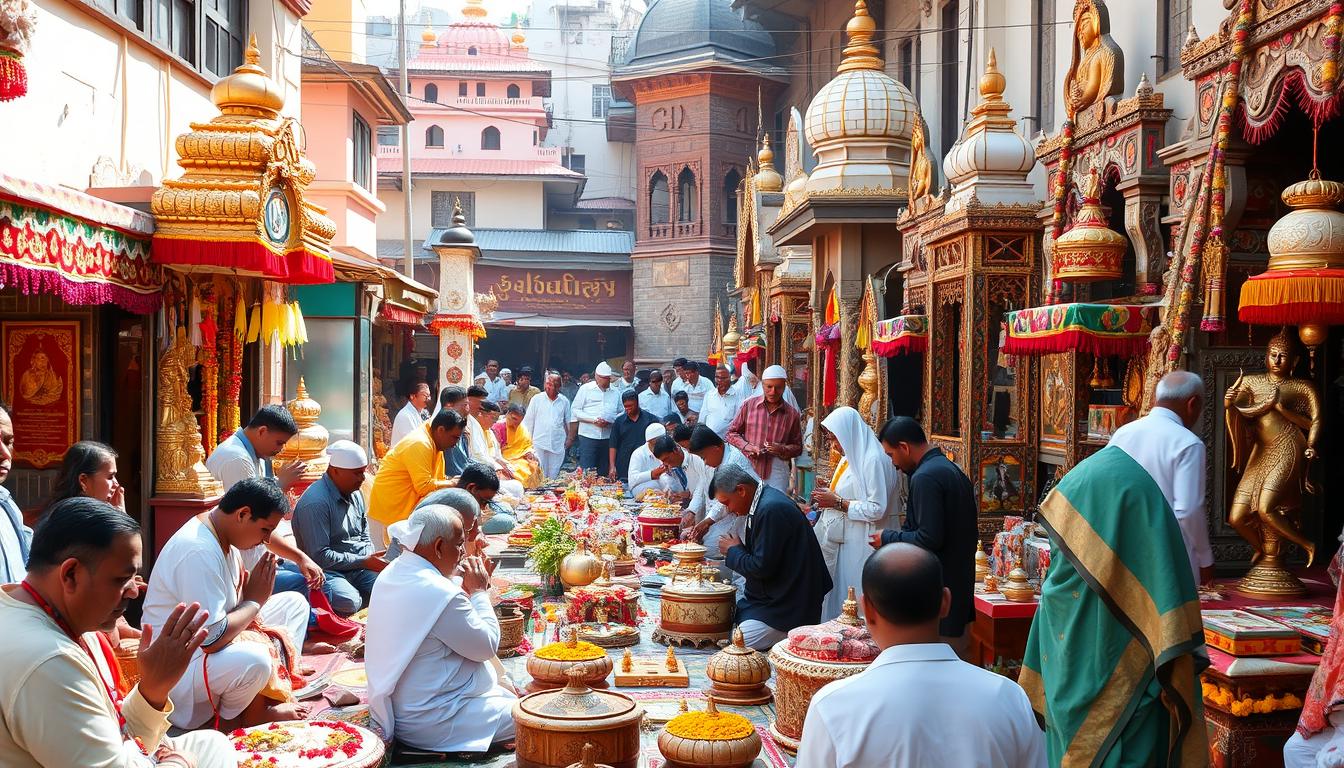
Religion has always been key in human history. It shapes how we see the world and live our lives. From daily rituals to moral guidelines, faith and spirituality are part of our cultures worldwide.
We will look at how religious practices blend with daily life across different cultures. This journey will show us how faith influences our daily experiences. It helps us understand the rich human experience and how beliefs shape our lives.
Religion touches our lives in many ways. It starts with morning rituals and continues in community gatherings. Even simple acts like prayer show the power of faith in our lives.
Understanding Religious Practices in Modern Society
In today’s fast-changing world, religious practices have evolved. Old ways of Worship, Traditions, and Ceremonies now blend with modern life. This creates a vibrant and varied religious scene.
Technology is playing a big role in religious practices. Live-streamed services and apps help people stay connected to their faith. This lets religious groups reach more people and meet the needs of today’s tech-savvy crowd.
“The integration of technology has revolutionized the way we engage with religious practices, making them more accessible and personalized.”
Also, Traditions and Ceremonies from different faiths are adapting to today’s quick pace. For example, some groups have started “mindfulness retreats” and “spiritual wellness workshops.” These mix old practices with new wellness ideas.
Yet, the heart of religious Worship remains key. Religious places still help build community, offer guidance, and comfort in hard times. As society changes, religious practices find new ways to stay relevant and meaningful. This ensures faith and spirituality remain key parts of our lives today.
The Cultural Significance of Religious Rituals
Religious rituals are key in shaping cultures and bringing people together. They are guided by sacred texts. These rituals help people connect with their faith and communities.
Prayer is very important in our lives. It can be through mantras, candles, or complex ceremonies. These rituals let people express themselves and find comfort, guidance, and joy.
“Rituals are the outward expressions of our inner lives, the physical manifestations of our spiritual yearnings.”
Religious rituals also keep traditions alive and create a sense of belonging. Festivals and rites of passage bring people together. They help us feel connected and share important moments.

In today’s world, religious rituals show us the strong bonds in our cultures. They help us appreciate our differences and the beauty of our spiritual heritage.
Exploring Religious Diversity in the U.S.
The United States is known for its religious practices, faith, and spirituality. These thrive in a diverse landscape. The country’s religious diversity shows its values of freedom and inclusion.
Across the nation, people of different faiths live together. They practice their religious practices with respect. You can see this in the tall cathedrals, serene temples, ornate mosques, and peaceful meetinghouses.
“The United States is not just a Christian nation; it is a nation of countless religious and spiritual practices, each contributing to the tapestry of our society.”
This religious diversity goes beyond places of worship. It shapes how Americans live their spirituality and faith every day. From big festivals to quiet moments of prayer, it influences our culture and values.
As America grows, its love for religious diversity stays strong. It helps us understand, respect, and value the many ways we express our human spirit.
The Impact of Religion on Morality and Ethics
Religion has shaped moral and ethical frameworks for many cultures. Sacred texts like the Bible and Quran guide the faithful. They help decide right from wrong, from personal actions to societal rules.
In today’s world, religion’s role in ethics is complex and debated. Some faiths stress personal virtue and justice, while others follow divine rules. As values change, religions must adapt their teachings for today’s challenges.
“Faith is not simply a patience in the face of something to be waiting for, but a calm and joyful affirmation of the Spirit in the midst of the world. It is in and through faith that we are able to interpret the meaning and significance of the data of our everyday experience.”
Exploring religion, morality, and ethics is fascinating. By looking at different faiths, we learn about the complexities of making moral choices today.

Religious Practices in the Workplace
In today’s diverse work environments, mixing religion and work is key. It shows an organization’s commitment to being inclusive and respecting beliefs. This is more than just following rules; it’s about creating a welcoming space for everyone.
Prayer is a common practice in the workplace. Many find comfort in taking time for personal worship during the day. Employers often set up prayer rooms or quiet spots for meditation and devotion.
“Allowing employees to practice their faith helps foster a sense of community and belonging, which can ultimately boost morale and productivity.”
But, making room for religious practices can be tricky. Employers must meet their team’s needs while keeping the business running smoothly. They have to think about flexible hours, time off for holidays, and the right facilities.
Despite the challenges, many companies see the benefits of embracing religious diversity. By creating a space where faith is respected, they build a more dedicated, loyal, and productive team.
The Use of Technology in Religious Practices
In today’s world, technology has a big impact on how we practice our faith. We see this in online Worship services and virtual pilgrimages. These digital tools change how we connect with our beliefs. They help us keep our faith alive in a new way.
Live-streamed Worship services have become very important during the pandemic. They let people join in from home, keeping them connected. This is especially helpful for those who can’t go in person because of health or mobility issues.

Technology also brings new ways to experience religious Rituals and Ceremonies. For example, virtual pilgrimages let people go on spiritual journeys without leaving home.
“Technology has the power to bring people together and enhance their religious experiences, even when they are physically apart,” says Dr. Sarah Lim, a professor of religious studies.
As technology keeps changing how we practice our faith, it’s important to find a balance. We need to keep our traditions while using new tools. This way, our Ceremonies and Rituals stay meaningful and open to everyone today.
Food and Dietary Laws Across Religions
Food plays a big role in many religious traditions. It’s fascinating to see how different cultures view food. From sacred rituals in Hinduism to dietary rules in Islam and Judaism, food shows the deep connection between faith and life.
In Hinduism, prasad is a key tradition. It’s food offered to gods that connects people to their faith. Ramadan fasting in Islam and kosher laws in Judaism also show the importance of eating mindfully.
Communal meals bring people together, making them feel part of a community. Shabbat dinners in Judaism, langar in Sikhism, and church potlucks are examples. They show how food can create a sense of belonging.
“Food is not just sustenance; it is a sacred medium through which we connect with the divine and with one another.”
Exploring religious traditions, we see food as a key element. It connects different cultures and beliefs. Understanding dietary laws and communal meals helps us appreciate the diversity of faith and spirituality.
The Intersection of Religion and Politics
The relationship between religion and politics is complex. Faith, religious practices, and traditions shape political ideologies and voting patterns. This is true in the United States and around the world.
In the United States, religion and politics are closely linked. Studies show that people with strong religious beliefs often get involved in politics. They support candidates and policies that match their faith. This affects many areas, like social policies and economic decisions.
“The separation of church and state is a much-debated topic, with some arguing that religion should have a more prominent role in the political sphere, while others advocate for a strict division between the two realms.”
Globally, the mix of religion and politics is even more complex. Different religious traditions influence politics in various ways. For example, Islamic law impacts governance in some places, while Hindu nationalism shapes politics in India. This mix has big effects on society, economy, and world politics.
As the world gets more connected, understanding the link between religion and politics is crucial. We need a balanced approach. This approach respects different beliefs while upholding democracy and the law.
Youth Engagement in Religious Practices
In today’s fast-changing world, the role of Spirituality and religious practices among the young is very interesting. Traditional faith groups are changing to meet the needs of youth. This change is transforming how Spirituality, Worship, and Ceremonies are seen by the younger crowd.
The rise of social media and digital platforms is a big factor in this change. Young people use these tools to share and explore their Spiritual beliefs in new ways. They join online Worship groups and create Ceremonies on social media. This digital involvement helps them feel connected to their faith, creating a sense of community that goes beyond place.
“The youth of today are not just passive recipients of religious teachings; they’re actively shaping the future of Spirituality through their unique perspectives and digital-savvy approach.”
Schools are also key in helping youth develop their Spirituality. They offer Worship programs and Ceremonies that are fun and interactive. This way, young people can dive into their faith in a lively and meaningful way. It helps them grow into active members of their faith communities.
Looking ahead, the bond between youth and religious practices will likely grow stronger. The creativity and adaptability of the young will influence Spirituality, Worship, and Ceremonies. This will keep these important traditions alive and meaningful for years to come.
The Relationship Between Religion and Mental Health
In today’s world, the link between religion and mental health is a big topic. Studies show that prayer and meditation can greatly improve well-being and help manage stress.
Many faiths stress the value of looking inward, being mindful, and feeling connected to something bigger. This can help people deal with life’s ups and downs and find peace and purpose. Prayer, for example, can lower anxiety, depression, and loneliness. It offers a way to express emotions and find spiritual support.
“Spirituality and religion can offer a sense of meaning, community, and support that can be particularly helpful for those struggling with mental health challenges.”
Meditation is another practice that benefits mental health. It can reduce stress, improve focus, and help with conditions like PTSD and anxiety.
The connection between spirituality and mental health is complex. Yet, research shows that adding religious and spiritual practices to life can boost well-being. It can also deepen our sense of meaning and purpose.

Future Trends in Religious Practices
As the world gets more connected, religious practices are set to change in exciting ways. Experts think we’ll see more focus on talking across different faiths. This is because people want to understand and respect the many religious traditions around us.
Religious leaders might use digital tools to reach more people. This could help spread their teachings and rituals further. It’s a chance for them to connect with a wider audience.
The trend of mindfulness and spirituality becoming popular could also shape religious practices. Young people might mix old beliefs with new self-care habits. This could lead to new ways of worship that fit today’s world.
Moreover, religious groups might get more involved in solving big social and environmental problems. Faith and community work could become even closer. This could help make our world more fair and strong for everyone.
By embracing these new trends, religious faith communities can keep growing and meeting society’s changing needs.