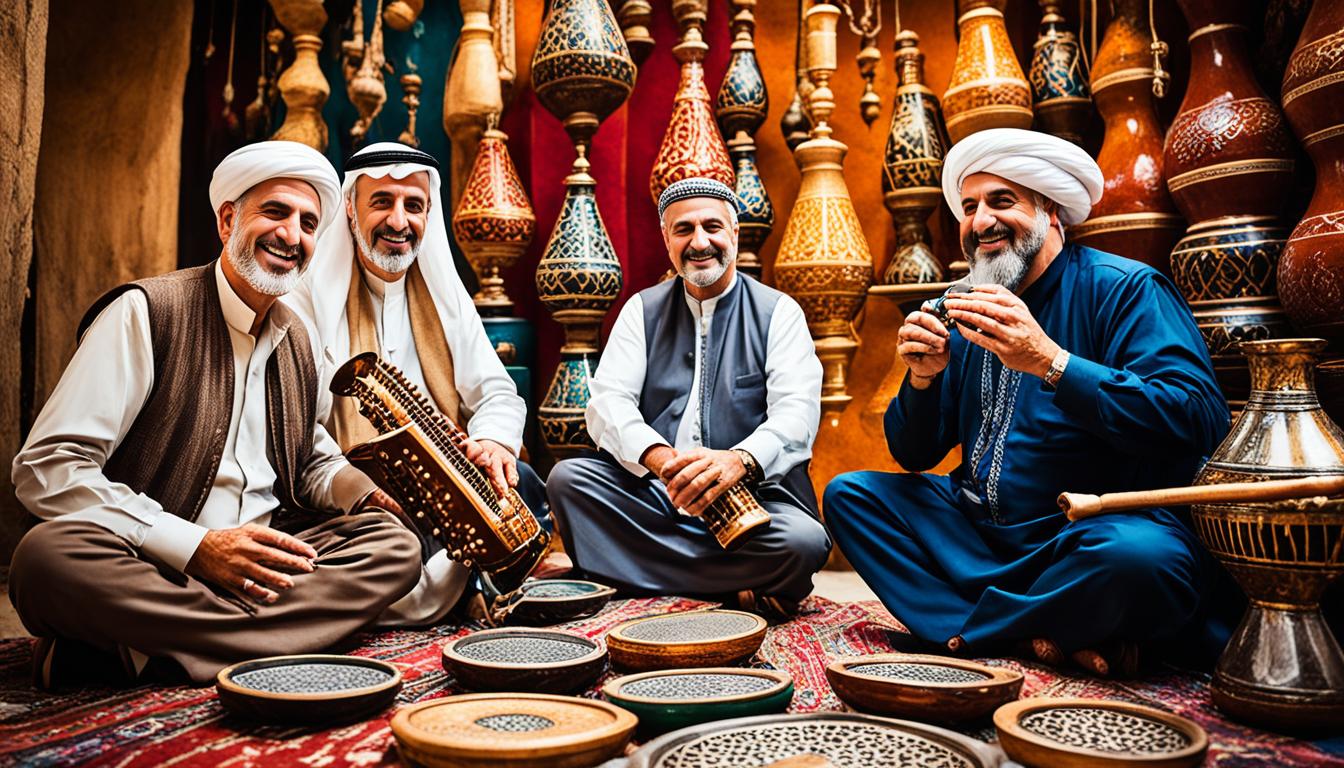
Exploring traditional music from the Middle East is like a trip through centuries of culture and art. This area is home to many musical styles, each showing off the region’s rich history. From Arabic tunes to the mix of Persian and Turkish music, it’s a blend of East and West.
At the core of this music is a deep link to the spiritual and divine. Sufism has greatly shaped the region’s music. Improvisation is key, making each performance unique and personal. Today, this music still charms listeners, blending old and new sounds.
Exploring the Rich Cultural Heritage of Middle Eastern Music
The music of the Middle East is filled with captivating melodies and rhythms. It comes from the region’s diverse cultures and geography. From the vast deserts to the green oases, music here has been shaped by religion and geography.
The Influence of Religion and Geography
The Middle East is home to major world religions, each influencing its music. Islamic chants, Coptic Christian melodies, and Jewish cantorial music have shaped the region’s music. These sounds have created a unique musical history.
Traditional Instruments and Their Significance
Traditional instruments like the oud, rebab, and daf are key to Middle Eastern culture. They show the region’s diversity and are vital for preserving art and culture.
From the tall minarets of the Levant to Persia’s sunny valleys, Middle Eastern music enchants people worldwide. It offers a peek into its rich cultural and religious past.
The Mesmerizing Melodies of Arabic Music
Explore the enchanting world of Arabic music, filled with complex scales and haunting melodies. At its core is the maqam, a system that shapes the region’s traditional music. It creates the unique sound loved by people everywhere.

The maqam is a detailed system that guides Arabic music’s structure. It sets the scales, modes, and patterns used by artists. Musicians use these to craft their captivating performances. They mix complex rhythms and improvisations for a unique sound.
The music of the Middle East has a timeless beauty that reaches people all over the world. By understanding its scales, modes, and melodies, we appreciate its artistry and heritage. This helps us enjoy the mesmerizing tunes of Arabic music even more.
Culture: Preserving the Rhythmic Tapestry of Middle Eastern Traditions
The rich musical heritage of the Middle East has been kept alive through oral tradition. For generations, musicians have shared their skills through live shows, mentorship, and close gatherings. This way, the complex rhythms and structures of the region’s music keep getting passed down.
At the core of this tradition is the importance of oral transmission. Middle Eastern music skips written scores, moving from master musicians to their students directly. This method keeps the rhythmic elements alive, as students learn the subtleties of each pattern.
It’s not just about technical skill. Oral tradition also keeps the cultural and spiritual heart of the music alive. By sharing knowledge and making music together, the deep meanings and feelings of the rhythms are kept alive. This ensures Middle Eastern music stays vibrant in today’s world.
The Persian Musical Legacy: A Harmonious Fusion
Persian music is known for its mix of different sounds. It comes from ancient Iranian culture and the deep effects of poetry and literature. This mix has made the music of the Middle East unique. It combines spiritual and secular sounds in a special way.
The Impact of Poetry and Literature
Poetry and literature have greatly influenced Persian music. Poets like Rumi, Hafiz, and Ferdowsi have inspired many musicians. Their words and melodies together create a deep spiritual connection.

This connection between literature and music has shaped many musical styles. Forms like the ghazal and the qasida are famous because of it. They show the beauty of Persian art and reach people all over the world. This mix of literature and music keeps Persian and Iranian music alive and loved globally.
The Turkish Tradition: Bridging East and West
Turkey’s music has always been a bridge between East and West. It combines the Middle East’s rich traditions with European classical music. This mix creates a unique sound that shows Turkey’s special place between cultures.
The music’s Eastern side comes alive in haunting melodies and complex rhythms. These have been shared for generations. The oud, a pear-shaped lute, and the ney, a flute, are key to Turkish music. They bring the mystic feel of the Middle East to life.
Yet, Western influence has also shaped Turkish music. Over time, Turkey has taken in European classical music. This blend has created a lively mix of sounds. Traditional Turkish songs, Ottoman court music, and modern pop and rock all coexist.
This mix has led to a music tradition that’s both rich and diverse. Turkish music now reflects the country’s cultural mix. It’s a proof of how music can bring people together, showing the beauty of cultural exchange.
The Influence of Sufism on Middle Eastern Music
Sufism’s mystical traditions deeply affect Middle Eastern music. They add a spiritual touch and a feeling of going beyond the ordinary. This branch of Islam has mixed with the area’s music, changing it in big ways.
The Spiritual Connection Through Sound
Sufi rituals like rhythmic chants and whirling dances have shaped Middle Eastern music. These activities connect the body and spirit. They make the music deeply spiritual.
The chants and rhythms of Sufi music bring people together. They make listeners feel a deep connection to something greater. This music takes you to a place of deep thought and spiritual connection.
Sufism’s mark is clear in the use of traditional instruments like the oud, ney, and daf. These instruments help carry the spiritual feelings in Sufi music. They link the physical and spiritual worlds together.
The mix of Sufi practices and Middle Eastern music creates a special sound. This sound goes beyond music genres and cultures. It shows how music can bring people together, sharing a spiritual experience.
The Art of Improvisation: A Hallmark of Middle Eastern Music
Middle Eastern music is known for its amazing improvisation. Musicians blend complex melodies and rhythms into their shows. This way of making music has grown over centuries, keeping the region’s music fresh and new.
Middle Eastern music improvisation is at its core. Skilled artists use their deep cultural knowledge and skills to make unique sounds. Improvising, or “taqasim” in Arabic, is seen as a sign of great skill in Middle Eastern musical traditions.
Improvisation shows off a musician’s skill and connection to their culture and music’s spirit. They use spontaneous performance to move through complex musical patterns. They switch between rhythms and add beautiful melodies.
This way of playing keeps traditional music alive and changing. It lets performers add their own ideas, keeping the music exciting. This keeps Middle Eastern musical traditions alive and inspires new musicians.
The Enduring Presence of Middle Eastern Music in Modern Times
Middle Eastern music still captures hearts around the world. Its rich traditions blend with today’s music, creating new sounds. This cultural music keeps evolving, touching people everywhere.
Fusion and Adaptation in Contemporary Genres
Traditional Middle Eastern sounds now fill popular music. Artists mix old instruments with new styles. This creates a unique sound that links past and present.
Now, you might hear a Moroccan singer in a global album or Middle Eastern drums in an electronic song. This music’s adaptability keeps it alive in today’s music scene.